

Key Takeaways
Contents
- The New York Stock Exchange parent company Intercontinental Exchange has invested up to $2 billion in Polymarket, while Kalshi reached a $22 billion valuation in its latest funding round.
- Banking leaders including JPMorgan Chase’s Jamie Dimon and Goldman Sachs’ David Solomon have expressed interest in entering the prediction market sector.
- The legal status of prediction markets remains unresolved, with courts and regulators divided on whether they constitute financial derivatives or gambling products.
- Sports-related contracts account for approximately 90% of Kalshi’s trading volume, making their legal classification particularly critical for the platform’s future.
- More than a dozen states have proposed legislation to restrict prediction markets, while federal lawmakers are pushing for increased oversight of insider trading risks.
- Survey data reveals that 60% of respondents suspect insider trading occurs on prediction market platforms, highlighting concerns about market integrity.
The financial industry’s most prominent players are aggressively pursuing opportunities in prediction markets, yet the sector’s trajectory hinges on an unresolved fundamental question: should these platforms be classified as financial instruments or gambling operations?
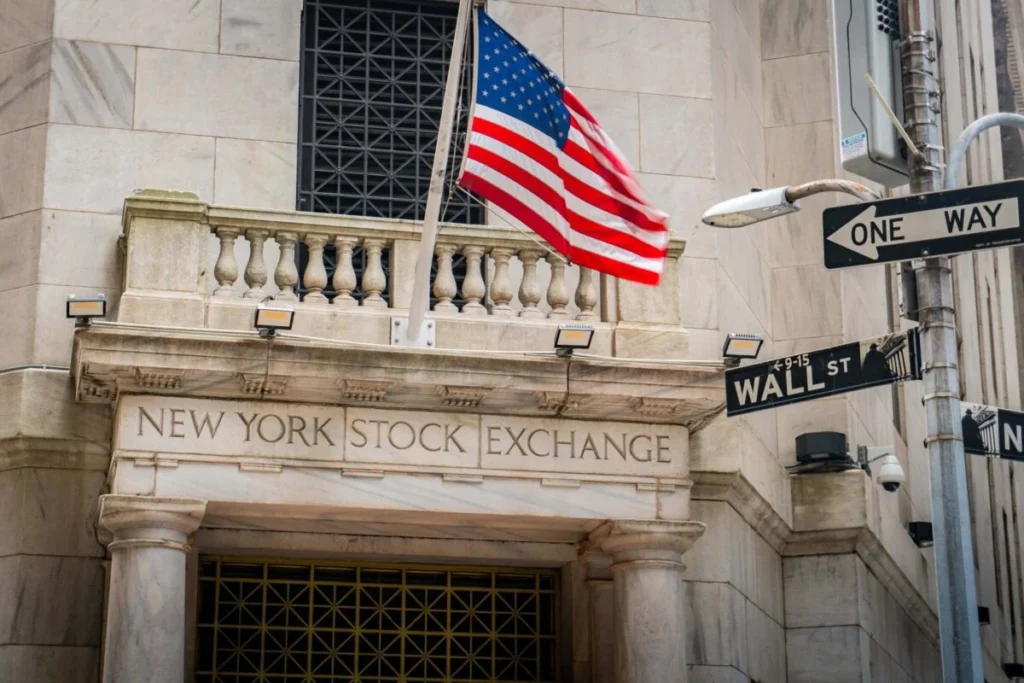
Last week, Intercontinental Exchange—which owns the New York Stock Exchange—announced an additional $600 million investment in Polymarket. This brings ICE’s total commitment to $2 billion, building on an initial $1 billion investment made in October 2025.
Prior to that, Kalshi secured funding at a $22 billion valuation through a round spearheaded by Coatue Management.
JPMorgan Chase CEO Jamie Dimon revealed to CBS that his institution is exploring the possibility of providing prediction market capabilities to its clients. Dimon clarified that any such offering would exclude political and sports betting while maintaining rigorous insider trading safeguards.
Goldman Sachs CEO David Solomon has similarly signaled enthusiasm for the sector. During Goldman’s fourth-quarter earnings discussion, Solomon described prediction markets as “super interesting” and confirmed the firm is dedicating “a lot of time” to assessing potential integration with current operations.
Financial technology companies have already entered the arena. Robinhood, Crypto.com, Coinbase, and Gemini have all launched prediction market offerings. Industry sources indicate that Binance is also experimenting with comparable functionality.
Trading houses and investment funds are establishing positions as well. Jump Trading, Susquehanna International Group, DRW, AQR Capital Management, Millennium Management, and Andreessen Horowitz have all engaged through active trading, platform development, or capital investment.
Leading financial news organizations such as Bloomberg, Google Finance, and CNBC have begun integrating prediction market information into their data offerings.
Regulatory Ambiguity Threatens Industry Growth
Despite substantial capital inflows, the regulatory framework governing prediction markets remains undefined.
Should courts determine that prediction market contracts qualify as derivatives, platforms could operate under federal commodity regulations. Such a determination would significantly disrupt the gambling sector and impact state revenues dependent on gaming taxes.
Conversely, if sports event contracts are deemed gambling products, it could eliminate the majority of platform activity. Sports contracts represent roughly 90% of Kalshi’s transaction volume.
A federal court ruled in 2024 that the Commodity Futures Trading Commission exceeded its authority in attempting to prohibit Kalshi’s political event contracts. The CFTC abandoned its appeal in 2025. However, this outcome failed to establish binding appellate precedent, leaving the classification of other contract types—particularly sports events—legally uncertain.
Numerous states have already initiated enforcement measures against prediction market operators. At least twelve states have introduced legislative proposals to curtail or prohibit these platforms.
At the federal level, forty Democratic lawmakers from both chambers signed correspondence this week requesting comprehensive training for government personnel on insider trading risks within prediction markets.
Trust Issues Surface as Valuations Soar
Market integrity represents another significant challenge confronting the industry.
A Truist Securities survey revealed that 60% of participants believe insider trading is taking place on prediction market platforms. Unlike conventional financial markets, prediction markets frequently focus on real-world events where informational advantages are significantly more difficult to monitor and regulate.
Both Kalshi and Polymarket implemented new anti-manipulation and insider trading protocols in March. The effectiveness of these policy enforcement efforts has yet to be demonstrated.
Research commissioned by the advocacy organization Gambling is Not Investing indicated that a majority of Americans perceive sports event contracts as gambling activities. While this polling originated from an industry opposition group, the findings underscore a persistent public perception obstacle.
Prediction markets have experienced more favorable treatment from federal authorities under the current Trump administration. Donald Trump Jr. maintains advisory positions with both Kalshi and Polymarket and has reportedly made personal investments in Polymarket.
This week, forty congressional Democrats advocated for enhanced regulatory supervision, demonstrating that political consensus on the issue remains elusive.
