

TLDR
Contents
- Tilman Fertitta has increased his acquisition proposal for Caesars Entertainment to $34 per share, placing an equity valuation of approximately $7 billion on the casino company
- Competing investor Carl Icahn has submitted a $33 per share proposal, creating an active bidding competition
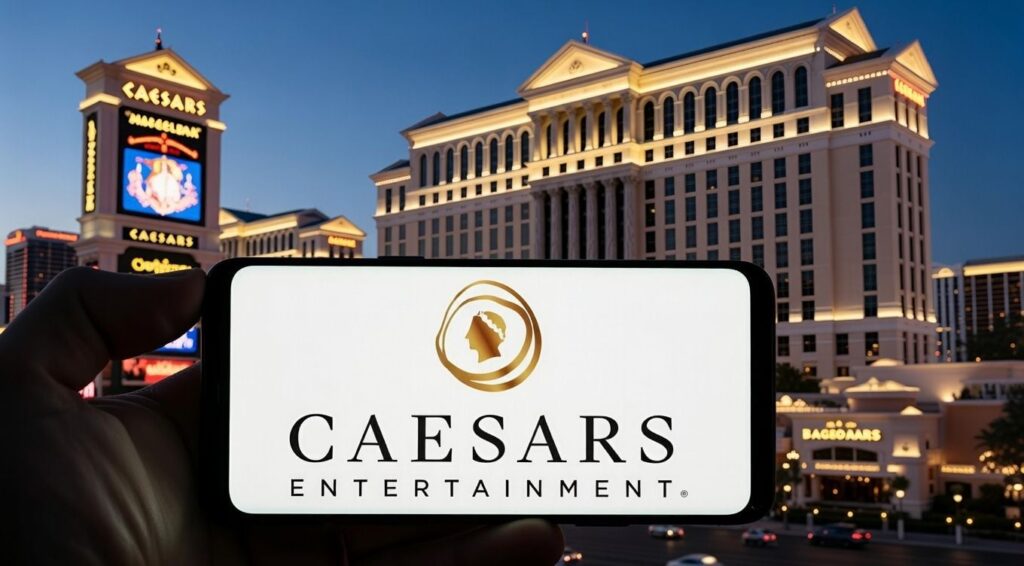
- Caesars controls more than 55 gaming facilities spanning 16 states across America, featuring the legendary Caesars Palace Las Vegas property
- The organization maintains debt exceeding $11 billion alongside total liabilities surpassing $20 billion
- Should either transaction materialize, industry observers anticipate a completion timeframe extending into 2027, while Caesars management remains silent on both proposals
A high-stakes competition between two prominent billionaires has emerged for control of Caesars Entertainment, among America’s premier casino operators. The acquisition contest intensified over the weekend as Tilman Fertitta elevated his proposal to $34 per share.
Fertitta’s enhanced offer assigns an equity valuation of approximately $7 billion to Caesars. The Houston entrepreneur’s Fertitta Entertainment portfolio encompasses Landry’s restaurant chain, the NBA’s Houston Rockets, and the Golden Nugget Casino brand.
Currently serving as U.S. Ambassador to Italy, Fertitta maintains significant equity positions in both Wynn Resorts and DraftKings while bringing extensive casino industry expertise spanning multiple decades.
His primary competition comes from Carl Icahn, the renowned activist investor presenting a $33 per share proposal. Icahn’s current Caesars ownership stands at approximately 1.2 percent.
Icahn previously controlled a substantially larger position, holding 15.9 percent of the company. He significantly influenced the $17.3 billion transaction that transformed Eldorado Resorts into the current Caesars entity in 2020.
Icahn’s initial January proposal came in at $28.50 per share. Fertitta’s subsequent entry with an elevated offer prompted Icahn to revise his terms upward.
The ongoing acquisition competition has generated notable stock movement for Caesars. Trading concluded at $25.02 last Tuesday before advancing to $28.41 in yesterday’s session.
This increase followed a 19 percent surge triggered by Financial Times coverage indicating Caesars was evaluating takeover proposals. Despite this recent momentum, shares remain down over 70 percent across the previous five-year period.
Caesars Entertainment’s operational footprint encompasses more than 55 gaming establishments with physical locations throughout 16 American states. The collection features Caesars Palace in Las Vegas, an iconic property that commenced operations in 1966.
The corporation faces substantial financial leverage. Year-end 2025 figures showed debt exceeding $11 billion against cash reserves of merely $887 million.
Debt Load Adds Complexity to Any Deal
Industry analysts emphasize that incorporating lease commitments elevates Caesars’ aggregate liabilities beyond $20 billion. This positions the company’s enterprise value north of $30 billion.
The substantial debt profile introduces additional transaction complexity. Any prospective acquirer must formulate strategies addressing this considerable financial obligation within their deal framework.
Neither proposal has faced outright rejection to date. Negotiations between relevant stakeholders are reportedly continuing.
Should either transaction proceed to completion, April represents the earliest conceivable closing scenario. Nevertheless, informed sources indicate 2027 emerges as the more plausible completion window.
Caesars Entertainment has declined to address either proposal publicly. Company representatives released minimal commentary stating they refrain from discussing market speculation or unsubstantiated reports.
No binding agreement has been finalized with either prospective buyer at the present time.
